

What does it mean to want to become a mother when your body has spent years sending you signals you were never taught how to read?
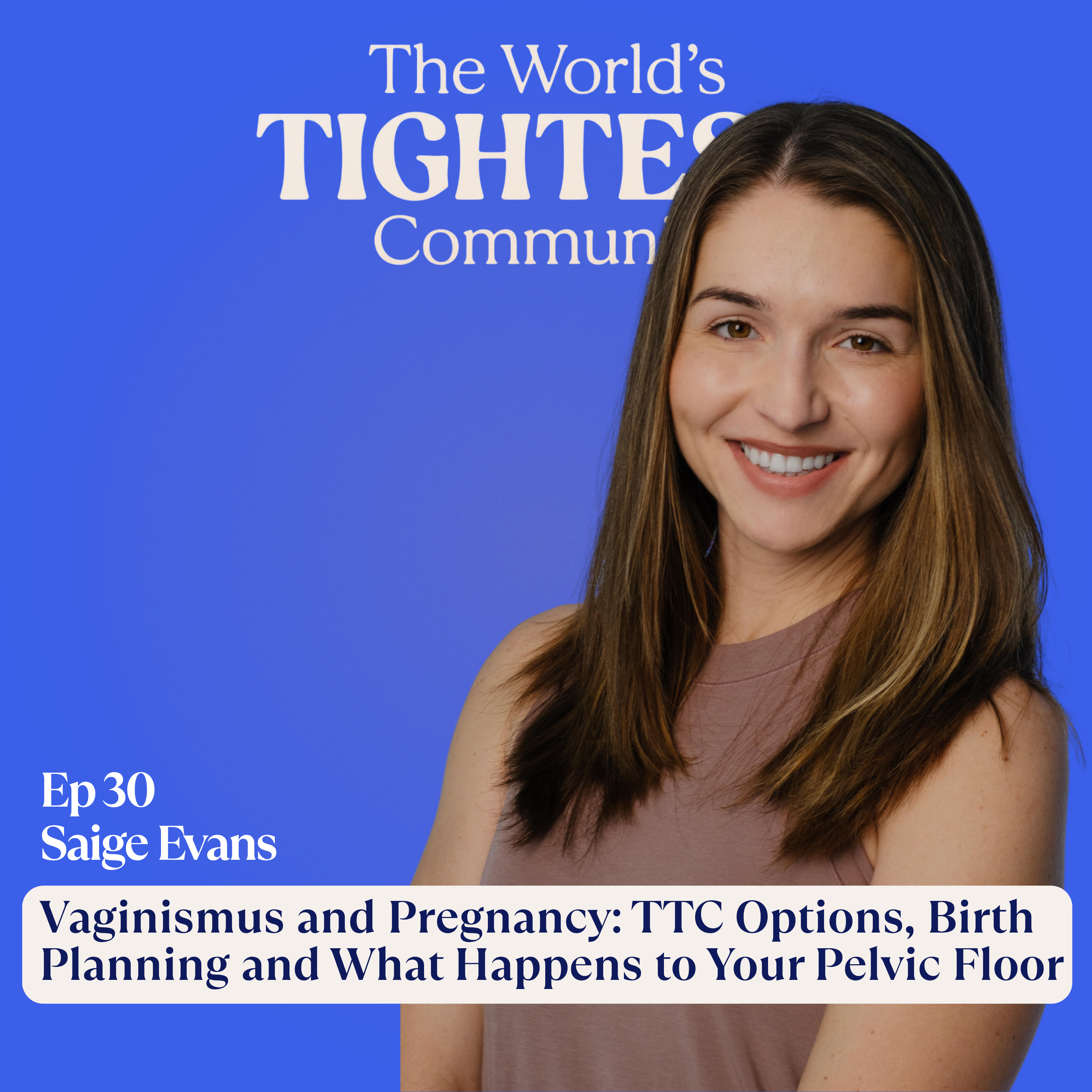
Today on The World's Tightest Community, Dr. Saige Evans joins the conversation - and she knows this territory from both sides. As Clinical Director at Bloom Pelvic Therapy in Florida and a practicing pelvic floor therapist herself, Dr. Saige specializes in sexual health and pelvic pain across every life stage. She also brings her own lived experience with pelvic pain to this conversation, which makes it as honest as it is clinical. Together, we map the full journey for women with vaginismus, vulvodynia, or chronic pelvic pain who are thinking about motherhood - from trying to conceive, through pregnancy, all the way to the birth plan - without flinching and without the usual glossy reassurances.
Pelvic pain and the fear of motherhood: the emotional toll no one talks about
For many women, the first signs of pelvic pain arrive in adolescence - a tampon that won't go in, a gynaecological exam that borders on impossible, a body that seems to be refusing something that feels biologically fundamental. By the time motherhood enters the picture, those early experiences have left a mark. Not just physically, but psychologically. The doubt runs deep: can a body that has fought me this hard give me the thing I most want?
This is one of the loneliest corners of living with vaginismus or vulvodynia. Society ties womanhood and motherhood together so tightly that admitting you're struggling to access either can feel like admitting there's something broken in you. It isn't. But the silence around it - the fear of being misunderstood, dismissed, or pitied - makes it harder for women to seek the information and support that could actually help them.
"Pelvic pain leads to a cycle of self-doubt - can the body achieve what seems biologically fundamental?"
Conception with vaginismus or pelvic pain: what your options actually look like
Penetrative intercourse is not the only path to pregnancy. That sentence alone can shift something for women who have spent years assuming vaginismus or chronic pelvic pain has closed a door permanently. At-home insemination kits, carefully timed ovulation tracking, and early consultations with fertility specialists are all real, accessible routes - and more women are using them than the mainstream conversation acknowledges.
None of it is simple. Ovulation tracking becomes its own discipline, fertile windows feel cruelly inconsistent, and the emotional weight of trying to conceive while managing a pain condition is significant. But taking ownership of fertility - learning the options, building the team, asking the specific questions - can restore a sense of agency that chronic pain so often strips away. The more specific your knowledge, the more effectively you can advocate for yourself at every appointment.
"The more information you have, the more you can advocate for yourself throughout the entire process."
Pregnancy with a history of pelvic pain: what to expect from your body
Pregnancy brings its own physiological changes - relaxin loosens ligaments, the pelvis shifts, and for women with a history of vaginismus or pelvic floor dysfunction, some of those changes bring unexpected relief while others introduce entirely new discomforts. Hormone surges don't erase a pain history. They layer on top of it, which means pregnancy for someone with chronic pelvic pain often requires a level of bodily attunement that goes well beyond standard prenatal care.
Pelvic floor physical therapy during pregnancy isn't a luxury for this population - it's preparation. Working with a specialist to maintain muscle function, practice breathwork, and build body literacy ahead of labour is one of the most practical investments a woman with pelvic pain can make. It doesn't guarantee a smooth birth, but it means arriving at that moment with more knowledge about your body, not less.
Birth plans, C-sections, and choosing what's right for your body
The birth plan is one of the most loaded documents in modern pregnancy - and for women with vaginismus, vulvodynia, or chronic pelvic floor dysfunction, it carries extra weight. An elective caesarean section may be the safest, most medically appropriate choice for someone whose pelvic pain makes vaginal delivery a significant risk. That is a legitimate medical decision, not a failure or a shortcut - and it deserves to be treated as such by every clinician in the room.
Honest, early conversations with your care team about your pain history, your triggers, and your priorities are what make a birth plan workable rather than aspirational. The goal isn't to script every moment. It's to understand your options well enough to make real decisions when the moment comes - on your terms, with the information you deserve to have.
"Our number one right now is to have a baby. So can we set that aside and focus on this goal - to almost take the pressure off - because that's making the pain with penetration worse?"