

Why does the information women need to understand their own bodies so often exist in research papers, yet so rarely reach the people living in pain?
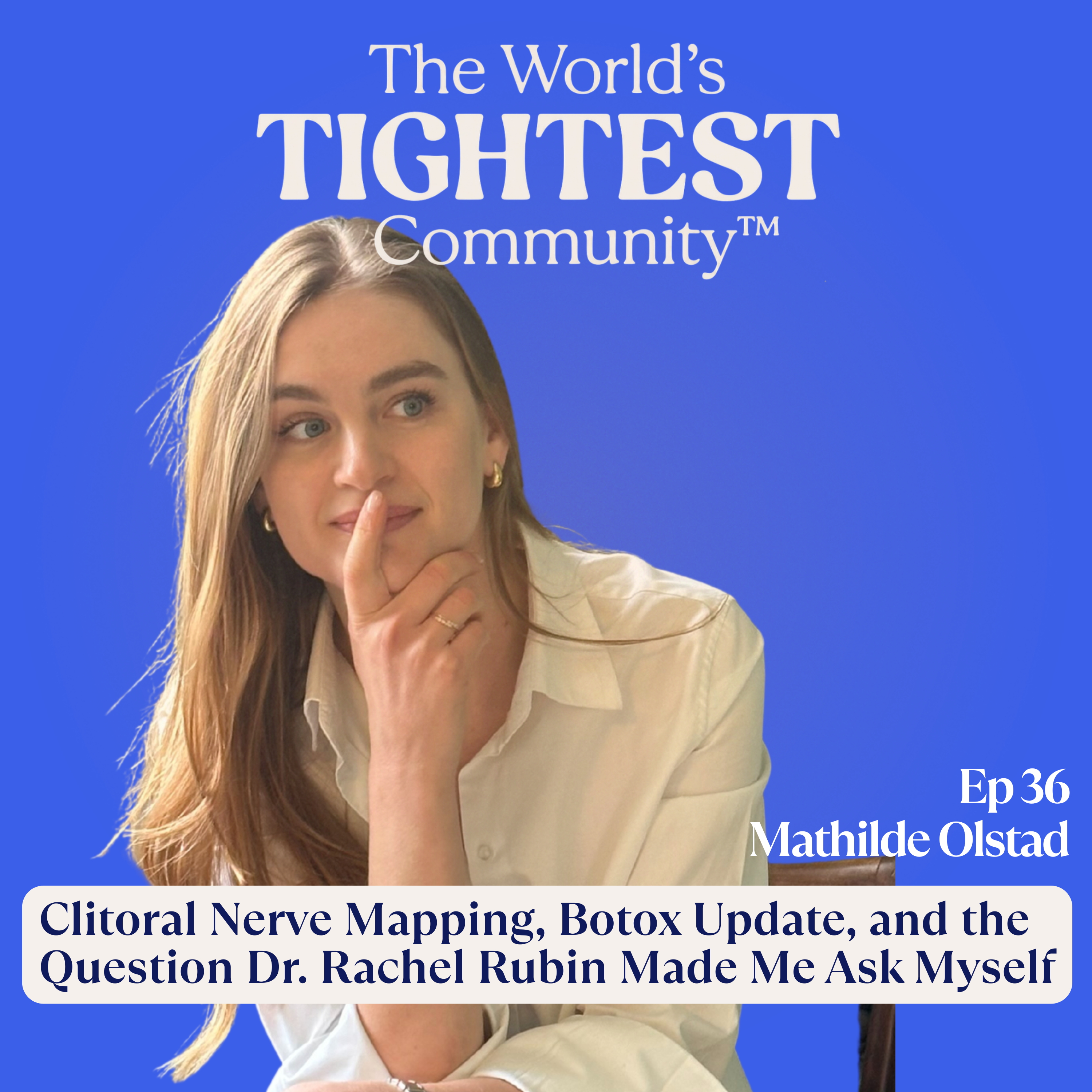
In this solo episode of The World's Tightest Community, host Mathilde sits with the questions that have been living in her head. There is no guest this week, just a few things she wants to talk through: a piece of clitoral anatomy research that genuinely excited her, a short Norwegian novel that reframed how she thinks about living with chronic pain, an honest update on her own treatment, and an invitation to help build something new. It is an episode about women's health, sexual health, and the stubborn gap between what medicine knows and what any individual woman in pain actually gets told.
What new clitoris research reveals about women's sexual health
A paper published in March out of the University of Amsterdam, Neuroanatomy of the Clitoris, set out to map something medicine has largely ignored. As Mathilde explains, the clitoris is one of the least studied organs in the body, partly because most of it is internal and difficult to map, and partly because centuries of cultural taboo around female sexuality meant nobody was in a rush to look. The history is its own story: the structure has been found, lost, denied and mislabelled repeatedly across more than 2,000 years, removed from the anatomy textbook Gray's Anatomy as recently as 1948 and only restored in 2008.
Using imaging that scans tissue in 3D down to a thousandth of a millimetre, the researchers traced the clitoris's main sensory nerve and found that the textbooks were wrong. Rather than tapering off towards the tip, the nerve branches out into a tree-like structure and supplies the clitoral hood and the mons pubis. This matters for two reasons. The clitoris is between six and fifteen times more nerve-dense than the penis, so understanding where those nerves run is central to sexual health. It also matters for surgery: branches were found running outside the zone surgeons are told to avoid, which has real consequences for women undergoing clitoral reconstruction, including the roughly 20% who experience a decline in orgasm afterwards.
It's because you cannot protect something you haven't properly mapped.
Living with chronic pelvic pain when you are always the capable one
The episode's middle turn comes from an unlikely place: a short, strange Norwegian novel called Doppler, about a man who falls off his bike and opts out of society. What stayed with Mathilde was the book's circling of the word flink, a Norwegian term for the diligent, high-achieving person who never drops the ball and always copes. She recognised it immediately, both in herself and in so many of the people she speaks to who live with vulvodynia, vestibulodynia, pudendal neuralgia and other forms of chronic pelvic pain.
There is a pattern, she notes, among people managing persistent pain: they are often the capable ones, researching their own condition better than their doctors, coordinating their own care, and arriving at every appointment with the printed-out study and the symptom diary and the good attitude. Being that relentlessly competent advocate is exhausting, and the book triggered something she has spoken about before, a need to connect with the rightful rage and the grief that sit underneath managing a condition largely on your own.
We're like the perfect advocates in a lot of instances.
A treatment update: pelvic floor Botox and topical hormones
Mathilde shares an honest update on her own treatment, having recently tried two new things. The first is pelvic floor Botox, aimed at the hypertonicity, or persistent muscle tension, that remains her most stubborn symptom. While the localised vestibular pain she lived with for years has improved enormously, the pelvic floor dysfunction still makes tampons, insertion and penetration difficult. Having expected to fight for the treatment at a specialist vulvar clinic in Oslo, she was struck by being offered it in the first appointment, based on the pattern of her pain.
What moved her most was the relief of being offered something that would physically act on the muscles, rather than placing yet more onus on her to relax, do more, and keep up the home exercises and pelvic floor therapy she will continue alongside the Botox. The second new addition is topical oestrogen, started because there are signs of a hormonal element to her pain. It is early days for both, and she is careful not to overclaim, but she wanted to be transparent about painful sex, dyspareunia and the slow, non-linear reality of treatment.
And the answer is that yes, I am, but I'm still in it.
How to help close the gap in women's health
The episode's final thread is an invitation. The frustration the whole podcast comes out of is that the information, the specialists and parts of the research already exist, but crossing the gap to actually receiving help currently requires enough money, time, stubbornness and luck to read everything and fight for everything yourself. Mathilde is now quietly building a resource designed to work on two sides at once: for the people living with these conditions and for the practitioners trying to treat them, so that knowledge can move to where it is needed rather than sitting in abstracts almost no one reads. She is at the stage of talking to potential users, and she wants to hear from anyone, whether you live with vulvodynia, vaginismus or another pelvic pain condition, or you are a clinician or researcher in the space.
There are concrete ways to get involved. You can reach out directly by DM or email to help shape the project early, and because platforms routinely throttle and restrict women's health content that uses clinical words like vulva and vagina, she has set up a newsletter as the one space she owns outright, where reach is not decided by an algorithm. Signing up keeps the connection intact even if a platform pulls the rug. You can also support the podcast itself: become a monthly contributor, with founding member merch available until the end of July, or, at no cost, follow, rate and review wherever you listen, which genuinely helps someone searching for words for something they have been living with for years.