

If you've been told your pelvic pain is "just stress" - or sent home without answers - what do you actually need to know first?
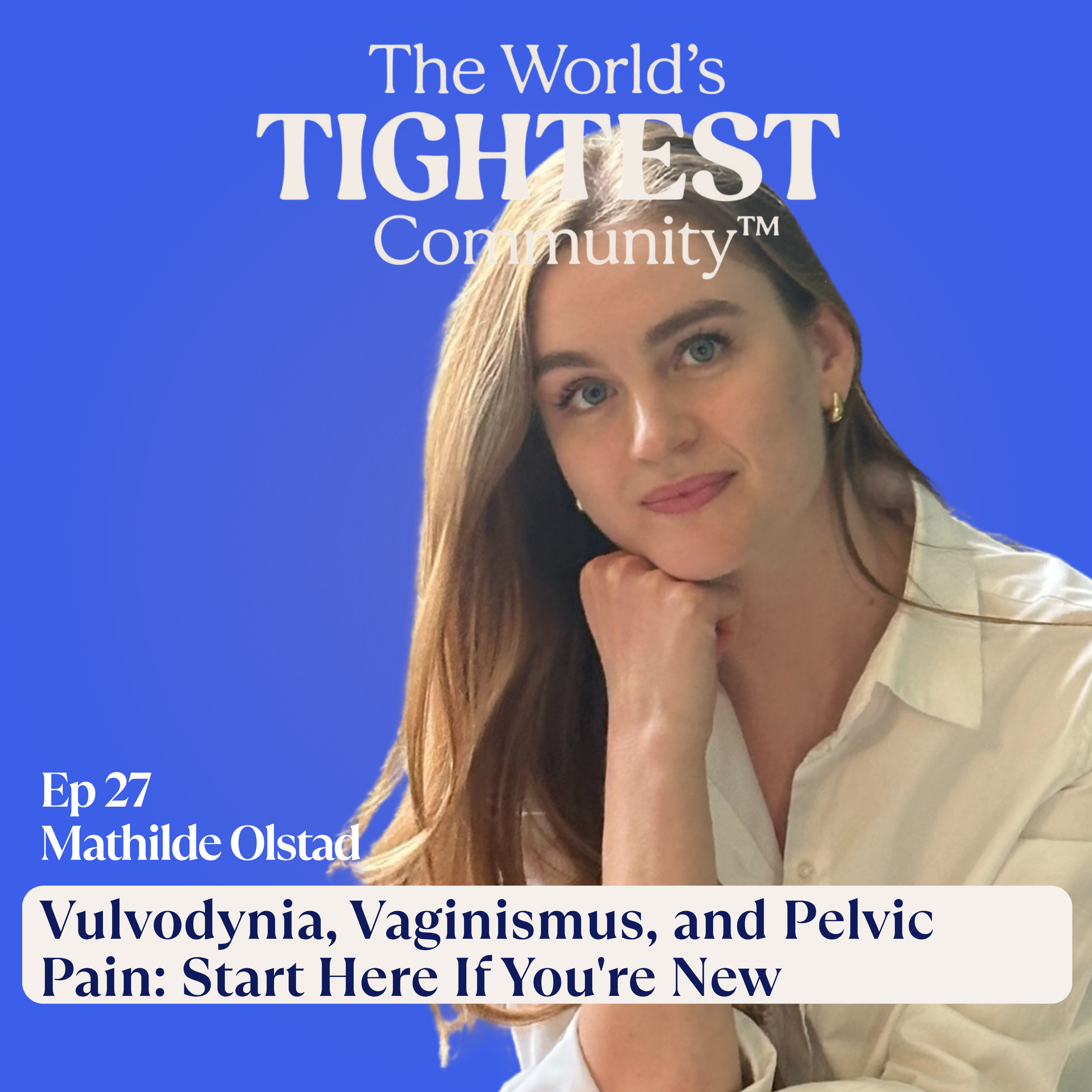
This is Mathilde's introduction to The World's Tightest Community for new listeners: a plain-language overview of chronic vulvovaginal and pelvic pain conditions, why so many people go years without a diagnosis, and what this podcast is built to do. It covers the full landscape - from what the conditions actually are to why the medical system keeps failing the people who have them - and ends with a clear invitation to use this space as a resource.
The conditions: what vulvodynia, vaginismus, and chronic pelvic pain actually are
Chronic vulvovaginal and pelvic pain isn't one condition - it's a cluster of related but distinct diagnoses that often get grouped under inadequate umbrella terms. Vulvodynia, vaginismus, vestibulodynia, pudendal neuralgia, interstitial cystitis, lichen sclerosus, and endometriosis all fall under this umbrella, and the differences between them matter because treatment approaches diverge significantly depending on root cause. Getting the right diagnosis isn't just a formality; it changes what treatment is actually useful.
This episode is an introduction for people who are new to the topic, or who have a diagnosis but don't yet have a framework for what it means. Mathilde walks through each condition plainly: what it is, how it might present, and why it so often takes years to reach a correct diagnosis. If you are at the beginning of trying to understand what is happening in your body - or trying to help someone you love understand it - this is a practical place to start.
"There are reasons. There are root causes. There are specific, nameable, treatable things happening in your body."
The 1 in 4 statistic - and why so many people don't know they're not alone
One in four women or people with vulvas will experience pelvic or vulvovaginal pain at some point in their lives. This is not a fringe condition - it is one of the most common chronic pain experiences affecting women globally. And yet the combination of medical under-training, cultural shame, and poor research funding means that most people reach a diagnosis only after years of being dismissed, misdiagnosed, or quietly told to live with it.
The isolation that comes with chronic pelvic pain is itself a consequence of this information gap. When something is not discussed in medical schools, not addressed on mainstream health platforms, and not part of the conversations people have with each other, sufferers assume they are uniquely broken. Naming the actual scale of the problem is one of the things this episode does, and it changes something to hear it said plainly.
"You are by no means alone. In fact, you fall under this stat of one in four women or people with vulvas who will experience pelvic or vulvovaginal pain."
Why most doctors aren't trained - and what that means for your appointments
The lack of training in vulvovaginal pain within standard medical education is documented, widespread, and largely unaddressed. Most GPs and gynaecologists will see multiple patients with these conditions throughout their careers having received very few hours of specific training on how to diagnose or treat them. This isn't a personal failing on the part of individual doctors - it's a structural problem that has real consequences for every patient who sits in those waiting rooms.
For patients, this means that advocating for yourself in medical appointments isn't optional - it's a practical necessity. This episode covers how to approach that: what language to use, what you're entitled to ask for, how to recognise when you're not receiving adequate care, and how to navigate a system that hasn't yet caught up with what is now known about chronic pelvic pain.
"The medical world has not caught up yet. Most doctors, even good ones, do not get more than a few hours of training on vulvovaginal pain in their entire education."
Using this podcast as a resource - and what the community is for
The World's Tightest Community was built in direct response to the information gap and the isolation that accompanies it. The podcast archives cover the full landscape of vulvodynia, vaginismus, and chronic pelvic pain: root causes and treatment options, the psychological and relational dimensions of living with chronic pain, and what advocacy actually looks like in practice.
People do get better - that is worth saying plainly alongside the complexity. Recovery doesn't always look the way you expect, and the timelines are rarely the ones you're first promised. But the combination of accurate information, the right practitioners, and a community that understands your experience is available. This podcast exists to help you find your way to it.